
This mission was the longest of those carried out in total autonomy of flight among all the belligerent aircraft in European and Eastern theaters of operation during WW2.
In this sense it was a primacy although little known: it was a question of covering a distance of nearly 4,200 km.....and in the course of the entire world conflict no Aeronautics succeeded even distantly to repeat this achievement (and/or equaled this distance).
 |
| A Savoia -Marchetti SM82 bomber |
In order to strike the British-controlled oil refineries at Manama in the Persian Gulf, four SM82s bombers -under the orders of Lieutenant Colonel Ettore Muti- undertook a flight of 4,200 km (2,610 mi), lasting 15 hours at 270 km/h (170 mph), that was for the time arguably a record for a bombing mission. Each aircraft carried a load of 1,500 kg (3,310 lb). A fifth Italian bomber went directly to Italian Eritrea, with support help in case of emergency for the four attacking Bahrain oil fields.
This long-range action was successful, taking the target totally by surprise, and the SM.82s landed without problems at Zula, Eritrea. The Italian airplanes started their flight from Europe (Rodi island), attacked refineries in Asia (Bahrain & Dhahran) and landed back in Africa (Italian Eritrea): it was the first "3 continents" mission in air bombing history.
This long-range action was successful, taking the target totally by surprise, and the SM.82s landed without problems at Zula, Eritrea. The Italian airplanes started their flight from Europe (Rodi island), attacked refineries in Asia (Bahrain & Dhahran) and landed back in Africa (Italian Eritrea): it was the first "3 continents" mission in air bombing history.
During the attack were dropped 132 bombs of 15 kg, that heavily damaged 2 refineries according to the Italians.
The raid caused the Allies some concerns, forcing them to upgrade their defences. This, more than the amount of damage caused (half a dozen wells and some oil deposits were set on fire in Bahrain, according to Muti), further stretched Allied military resources.
British authorities were forced (by the civilian population who was greatly scared by the attack) to create in 1941 a "barrage balloon defense" around Bahrain, even if the British "propaganda" declared that there has been only minimal damage by the Italian raid.
However it is noteworthy to pinpoint that Italian historians -like Paolo Tripodi- argue that this huge panic of the civilian population was a sure proof of a great damage done by the bombings, because if the destruction was small it was not going to be noted by the Manama civilians -who lived far away from the oil fields and refineries.
 |
| Italian Air force Captain Paolo Moci |
Lt. Colonel Muti conjured a clever plan to raid the Arabian Oil fields in the Gulf. He deliberately ignored the fact that England and France controlled a majority of the space around the area [ Cyprus, Egypt, Lebanon, Syria, Iraq, Kuwait, Saudi Arabia ] and, not to forget, the vast uncharted distance, plus lack of military support or reach. Muti argued that attacking the Oil Fields would limit the supply of fuel to the Mediterranean, and compel the British to spread their forces. In turn, reducing their own presence in the Mediterranean, the British were forced to allow Italy better control in the area.
The plan was too ambitious to say the least. The distance proposed was never covered before, with unheard of weight loads. The best Aircraft of the time struggled with 19,000kg: Muti overloaded his bombers with over 21,000kg. Needless to say, most Italian Generals doubted Muti’s sanity. Fortunately, with an impeccable record of daring achievements, Muti had the backing of “Il Duce” himself. He ordered the plan into action with confidence, famously stating:<< “se Muti pensa di potercela fare, lasciatelo fare” | “if Muti thinks he can do it, then let him do it” – Benito Mussolini>>.
The Plan Building on his short but audacious experience, Muti spended two months planning the world’s first 15hr air raid, spanning a distance of 4,200 km. He utilized four Savoia-Marchetti SM.82, modified for better lift and longer range, and the fifth one for support in case of an emergency. He took the council of his trusted Capt. Paolo Moci, and finalized routes and set targets.
The timing had to be just right, with favorable tailwind to allow them the range; a difference in 10kts would render the plan useless. The speed had to be such, to not waste fuel. The attack was to be an uncontrolled or autonomous run, deep in enemy territories. Therefore all pilots had to be familiar and knowledgeable for the 15hrs of radio silence. They even factored a full moon to aid them in the raid. Being Ramadan, that would have made it around the 15th or 16th just in time for Girgaon – قرقاعون. The second part was a Propaganda campaign, to boost Italian confidence, and shake the enemy's will.
The plan was to overload aircraft with 3000 ltr of extra fuel, and a cache of 15kg, 20kg, and 25kg bombs, the least carrying 150 units. A strip down of all unnecessary equipment including defensive guns. Engines were modified for extra power and reduced weight, even manned positions such as engineering station were removed to save weight and space. The plan was to fly from Rhodes to Bahrain, then land in Italian controlled Eritrea. Avoiding backtracking through Iraq and Syria, or running into the British RAF and French Air Force.
 |
| Bahrain Refinery: it was built in 1936 and bombed by Muti in October 1940. In the distance can be seen the Manama buildings. |
The Raid
With the dimming afternoon, the raiders took to the sky on the 18th of October 1940. Overloaded with fuel and bombs, the four Italian built SM.82s, rushed down the runway. Even with three modified 950hp Alfa-Romeo 128 engines roaring, the raiding fleet struggled to lift, only inching in their climb to 7,000ft.
Overloaded with an all-up weight of 19,500kg, the four aircraft struggled to get airborne. They were galvanized by the barnstorming Tenente Colonello Muti in the lead aircraft, however, who had demonstrated with his crew of Maggiore Giovanni Raina and Capitano Paolo Moci that it was possible – albeit inadvisable – to take off in an SM.82 laden with 21,000kg.
The remainder of the flight was crewed by Tenente Colonello Fortunato Federici, Capitano Aldo Buzzaca and Tenente Emanuele Francesco Ruspoli in the second aircraft, Capitano Giorgio Meyer, Tenente Adolf Rebex and Sergente Maggiore Aldo Carrera in the third and Capitano Antonio Zanetti with Tenente Vittorio Cecconi and Sergente Maggiore Mario Badii in the fourth.
With two dimly lit Diamond decals on top of his wings, Muti leaded his fleet towards a fate unknown. Passing Cyprus before dusk, then navigating the mountains of Lebanon and Syria in complete darkness. With Damascus being the last point of visual reference, before reaching the Gulf. Followed by a major challenge to traversing the mainly uncharted Arabian Desert. With only his vulnerable companions next to him, Muti flew in silence.
While over the desert they constantly changed altitude to hide above the clouds. A minor issue arose when one of the aircraft lost visual contact while entering the desert, but Ettore Muti had anticipated this situation and was confident in his plan. The formation held throughout the outward leg, but at the last minute the number 2 aircraft of Tenente Colonello Federici lost sight of the leader and fell out of the formation. Rather than risk a collision with his unseen colleagues or arrive too late and draw anti-aircraft fire, he set course for Dharan (Saudi Arabia) and let the remaining trio of bombers close in on Bahrain.
By 1 am they reached Dohat Azuwar [دوحة الزوار ] close to today’s southern Kuwaiti region of AlWafra [الوفرة ]. With a bomber's moon, the raiders prep for the attack. A hazy sky forced them to decent to 3,000ft. Maintaining constant visual contact with the ground, and searching to identify their next waypoint of Al Qatif – Saudi Arabia [ القطيف - السعودية ].
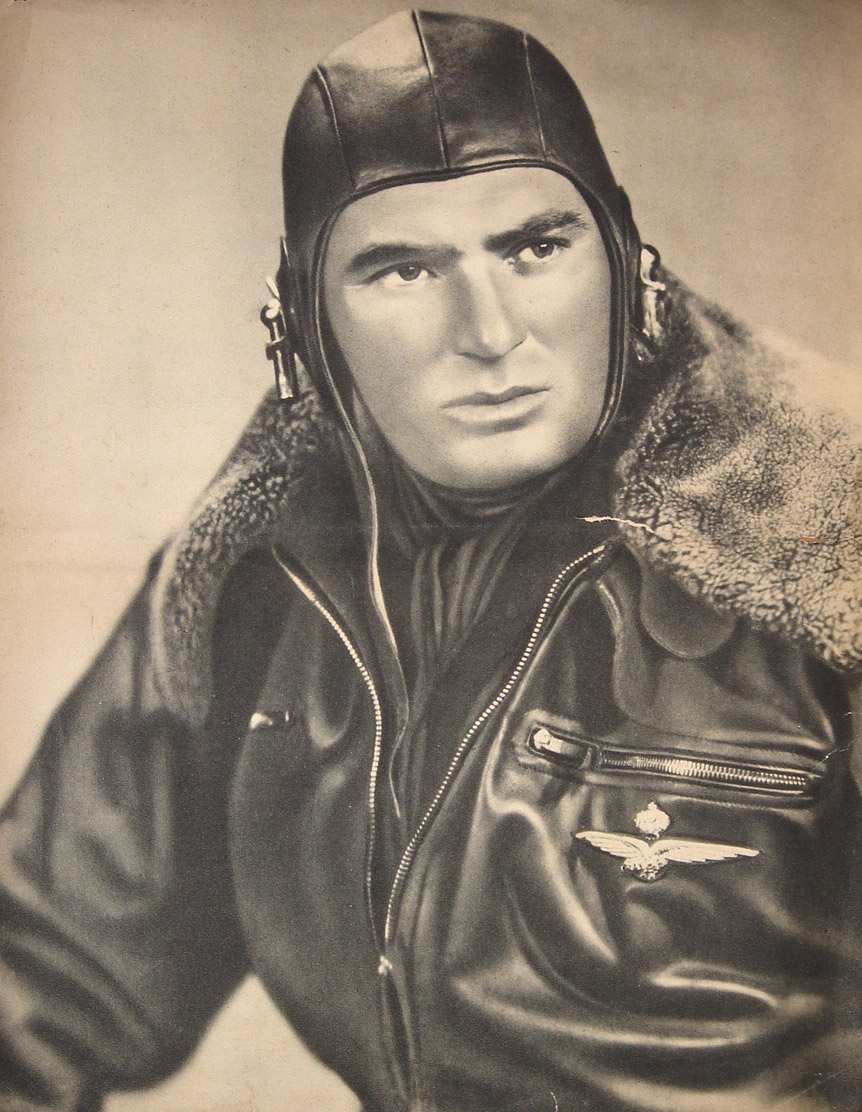 |
| Ettore Muti |
At 2:00 am Bahrain Time, Muti and his crew see the bright lights of Bahrain. Lit up like a beacon, Manama and Muharraq were easy to identify. Within 20 min, the fleet was over the Island. Unsuspecting and completely caught off guard, the RAF further aided the raiders by lighting up the runway when their engines were heard. Only shutting them off once bombing started.
They targeted and hit the obvious RAF Muharraq Airfield part of today's OBBI, The Royal Navy HMS Jufair Naval Base [ Mina Salman - ميناء سلمان ], and the distant flames of the Oil Refineries in the Sakhir Desert. Dropping 150 bombs out of each of the three planes [Totaling Approx 9,000kg], they turn towards Saudi and continue their trip.
With the bright flashes of bombs exploding, the fourth trailing bomber identifies the position and heads straight to Dahran – Saudi Arabia |[الظهران - السعودية ]. Attacking secondary targets, of Aramco refineries and oil wells, and finally rejoining the fleet
With the weather clearing up, and the winds calm. Muti and his crew fly the rest of the night towards the Red Sea. Maintaining a constant speed and altitude to economize fuel consumption. Just past Layla – Saudi Arabia [ ليلى – السعودية ], they see the Mountain chains of the Aseer - Saudi Arabia [عسير السعودية ] west of the Arabian Peninsula; beyond is the Red Sea and salvation.
Halfway over the Red Sea, they get word that a retaliatory attack by the RAF on Massawa - Eritrea was underway. They were advised to keep their distance, avoiding the shoreline and avoid being spotted by the aggressive RAF raiding fleet of " Gloster Gladiators". Safely avoiding detection, they reach their planned destination of Zula - Eritrea [ ዙላ ] around 9 am, surprisingly with a reported 30-40 min of additional fuel. Received as Heroes, the fleet arrives victorious, and triumphant on more fronts than expected.
On the way back to Italy from Eritrea, Muti and his crew coordinated a small but spiteful attack on Port Sudan (in coastal Sudan), as an additional consolation prize: some bombs were dropped.
For obvious reasons, reports differed as to the effectiveness of the bombing. The British reported that most bombs fell into the sea and only one hit the land, blowing up on a mountain of spoil from the drilling activity with a broken leg as the only casualty. The Italians meanwhile claimed to have set six wells ablaze with secondary fires seen burning in the storage areas.
The British authorities declared that in Bahrain a total of 84 bombs were dropped but remarkably, no one was killed or seriously injured and little damage was done. However, this event caused a mass panic amongst the civilian population, now realizing that the war was going to hit home ( the Italian historian Paolo Tripodi wrote that this huge panic was proof of a great damage done by the bombings, because if the destruction was small -as british propaganda claimed- it was not going to be noted by the civilians). Furthermore the British managed to use this attack as an excuse to rally Muslims behind them, stating that the Italian aircraft violated Meccan airspace during its journey.
Ettore Muti was duly promoted out of the front line and ended up working in intelligence, where he made a formidable enemy in the former Chief of Staff, Pietro Badoglio. Muti discovered that Badoglio’s record in the field left a lot to be desired, and when Badoglio successfully ousted Mussolini from power in 1943 one of his first job was to order to assassinate the man who had masterminded the Regia Aeronautica’s barnstorming long-distance bombing campaign (read for further information: http://mutiettore.blogspot.com/ ).

The following are excerpts from an essay written in 2012 by Abdulateef Al-Mulhim about the Italian bombing -by mistake- of Dhahran, in Saudi Arabia:
"...….Oil was discovered in Saudi Arabia in 1938. After this discovery, the Arabian Gulf region gained strategic importance. And when World War II started in 1939, no one imagined it will spread all over the world, even Dhahran, Saudi Arabia.
As the war continued, it was clear to every political and military leader that whoever controls the oil fields and oil supplies will end up having the upper hand and will eventually win the war.
Saudi and Bahraini oil fields were very close to each other and there was American and British presence in the area. In June 1940, the Italian leader and Prime Minister Benito Mussolini received a plan to destroy the oil fields in Bahrain to disrupt the oil supplies to the British Navy.
The plan was suggested by the Italian test pilot, Air Force Captain Paolo Moci. During World War II, the Gulf region was the center-line dividing the world. The Western front was Europe and Africa and the Eastern front was the Pacific region.
On a late afternoon on Oct. 18, 1940, four Italian Air Force planes with about 1,300 gallons of fuel and loaded with machine guns and bombs took off from a runway in the island of Rhodes, Greece. The four planes were Savoia-Marchetti S-82. They had three nine cylinders 880-HP and fitted with Alfa Romeo propeller engines. The Italian Air Force had an experience with long range bombing against the British in Gibraltar. But, the air raid on Bahrain was about 3,000 miles and would be around 15 hours long.
The four planes flew in diamond formation and flew across the Eastern Mediterranean and crossed Lebanon and Syria. And when they crossed Iraq they made a right turn to fly over Kuwait. They headed south and flew over the Arabian Gulf. During this long flight, the last plane in the formation lost visual contact and they were able to exchange few words to maintain radio contact because they were in radio silence. The formation captain knew the fourth plane was in the vicinity, so they continued their flight as planned. The three planes couldn’t slow down for fear of stalling and the fourth couldn’t increase its speed to catch up, so all four planes continued their flight.
The three planes finally reached Bahrain and they had no trouble finding the oil installations.
Flames from the refineries lighted up the dark skies. And it was mentioned in a book (Discovery) by Wallace Stegner and illustrated by Don Thompson that the British ground personal assumed the planes are British and even switched on the runway lights for the planes to land. There were no enemy air bases within one thousand miles. Bombs were dropped but, the damage was minimal. But, what happened to the fourth plane which lost visual contact?
The fourth plane drifted about 25 miles to the west and eventually ended up being over Dhahran, Saudi Arabia. The pilot thought he was flying over Bahrain. He saw the oil installations and the fire from the torch and dropped his bombs. The Aramco (Casoc) camp had American families, Saudi employees and other foreign workers. They thought it was an earthquake. Those living around the oil installations were very lucky. Just days before the raid, the orange waste gas flares were moved farther away from the vicinity of the oil installations and the employees housing.
The bombing run lasted a very short time and the four planes were able to gather again and got into formation and headed south west toward Eritrea, which was under Italian rule. The planes finally landed after flying 3,000 miles for more than 15 hours and flying over three continents. They took off from Europe, flew over Asia and landed in Africa.
Later on the same four planes commanded by the same crew flew back to Rome via Benghazi, Libya which was also under Italian rule.
The raid in reality didn’t accomplish the intended goal. Bahrain and Dhahran were barely scratched, but the Italian radio announced that the oil installations were "nearly totally" damaged. However some damage was done in the Bahrain oil fields.
This long-range raid raised many questions in the American and British intelligence departments. The Italian Air Force pilots and planes have the capability to fly 15 hours and cover 3,000 miles and be able to carry heavy loads of fuel, bombs and ammunition. But, what were the future impacts and the influences of this Italian air raid on the course of WWII? When the US and British intelligence services knew about the attack, they were worried about the Axis forces' ability to attack any target within thousands of miles from wherever the bases are...…."


